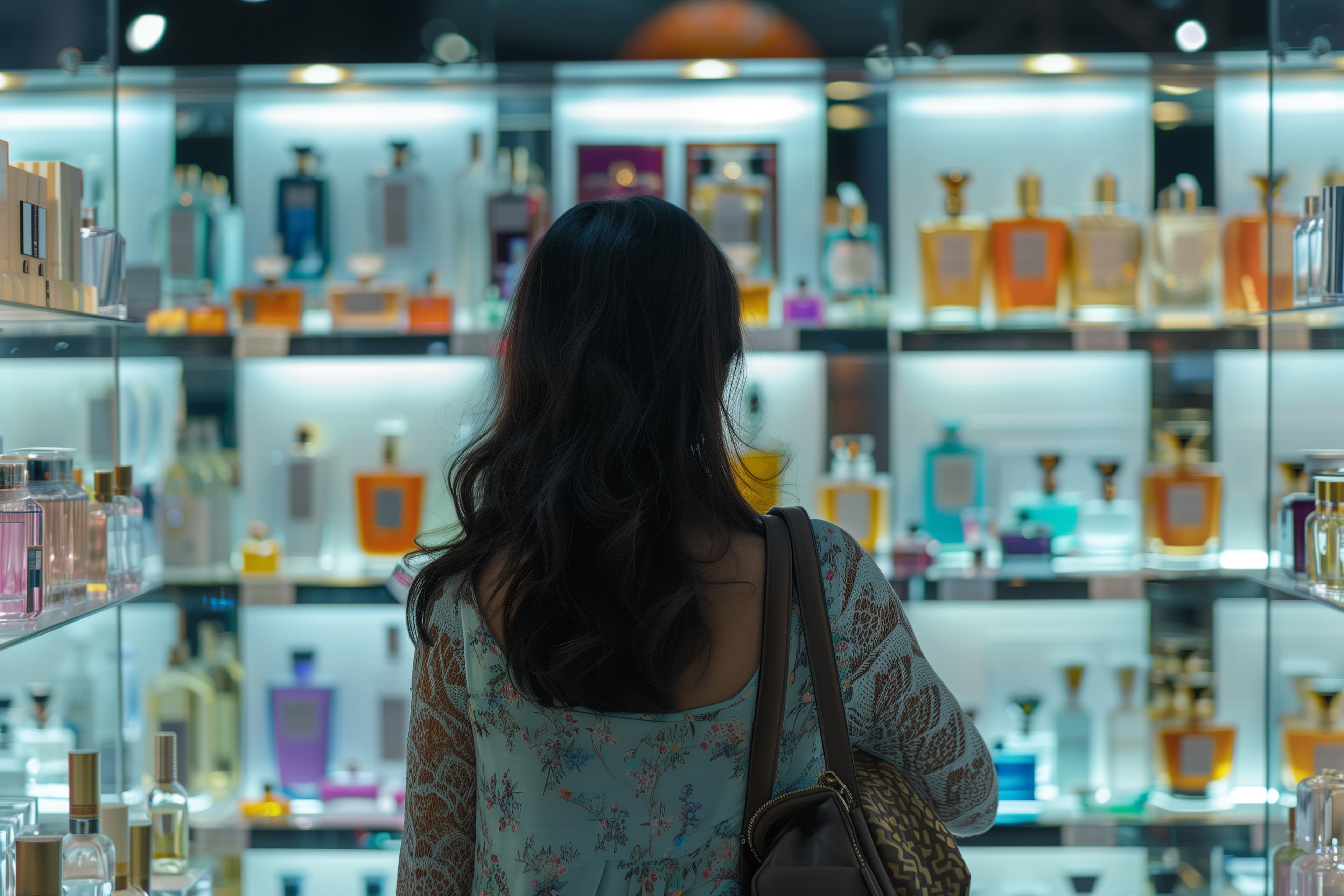
The beauty store isn’t what it used to be: 4 shifts reshaping beauty retail across APAC in 2026
January 21, 2026
As we move into 2026, beauty consumers are setting a high bar for value expectations. In a 2025 report, 54% of beauty executives identified “uncertain consumer appetite or restricted spending as the greatest risk to the industry’s future growth”, setting the tone for the upcoming year. Every part of the beauty shopper strategy must play a role in addressing this challenge, and none more so than the retail store itself. No longer just a place to browse or buy, stores are evolving to accommodate beauty appetites in a region shaped by diverse culture and beauty rituals. The APAC store must work harder than ever to draw in beauty consumers, provide value, and build trust.
Meanwhile, ecommerce sales are projected to account for around a third of beauty sales in 2030, putting a consistent pressure on brick-and-mortar stores to redefine their relevance. The constant tug-o-war for consumers means carving out different niches for each in value and experience. As a result, stores are becoming spaces for discovery, trial, and consultation, rather than simple shelves of stock.
All of this is reshaping how beauty is sold on the shop floor. From store layouts and tester strategies to education-led staff interactions and localized assortments, in-store retail is evolving to keep pace with a more discerning, self-aware consumer. Today, the beauty store must investigate the value and experience they bring to the consumer, leaning on the new frontiers in technology and personalization to deliver in-store excellence.
How shoppers perceive value is changing
Consumers are raising their value expectations. The beauty industry is largely expected to weather economic hardships through the “lipstick effect” where little luxuries, such as lipsticks, are still indulged in. However, this mindset appears to be shifting, with 63% consumers not convinced that “premium beauty products are higher-performing than mass beauty ones”. How do brands entice their customers to invest in little luxuries when they don’t believe in their value? Consumer’s value skepticism is translating into sales as “24 percent of consumers have traded down to cheaper beauty products in the past 12 months”. This demonstrates a decisive shift in attitudes towards spending in the sector. Beauty brands in 2026 have an uphill battle in demonstrating value.
In tandem with value skepticism, APAC consumers are redefining what ‘beauty’ means to them. “45% of APAC consumers define beauty primarily as being healthy” which demonstrates a shift towards wellness as a beauty standard. In the wellness space, science-based claims are used as metric for identifying health benefits. For APAC beauty consumers, science-led benefits, ingredients, and performance now play a central role in decision-making. Shoppers are willing to pay more when those claims feel credible. In-store, this raises the bar for clearer explanations, visible proof, and assortments that justify their place on the shelf. Clever POSM design that champions education and balances aesthetic trends with scientific credibility will be key in proving value.
Experiential retail is turning beauty stores into event spaces
Across APAC, beauty stores have shifted from places to browse into places to experience. Pop-ups and mall activations are on the rise, thanks to more supportive event environments in certain markets. Hong Kong is one clear example, where government push to ease approvals and fees are expected to help improve a year-long retail slump and boost pop-up activity.
These pop-ups are designed around interaction. Shoppers can trial products through guided routines, attend consultations, and take part in small-scale events that feel social and culturally relevant. For example, in Hong Kong, Fenty Beauty created a cinema-inspired pop-up that referenced the Hong Kong “golden era” of the 80s and 90s. The pop-up format of the store allows the brand to be more playful and intentional with their aesthetic design, leaning into a trend or hyper-localized style for a limited amount of time, and closing before the trend becomes stale. For Fenty Beauty, their limited-time store acted as a tribute to the local culture of Hong Kong, merging the brand’s identity with the specific APAC location.
For brands, experiential retail has become a low-risk way to learn quickly. Temporary formats allow teams to trial SKUs, pricing, and routines, observe how shoppers interact with products, and refine what works before scaling into permanent stores. In this environment, experience is not an add-on. It is becoming central to how physical stores attract attention, build confidence, and stay relevant in an omnichannel journey.
This shift is changing how channel activation strategies are designed. POSM can no longer be built as static, long-life assets tied to a single campaign or season. Instead, brands are moving toward shorter activation cycles, modular formats, and reusable systems that can be tested, adapted, and redeployed across channels and markets.
That evolution brings new sustainability pressures. Faster cycles and temporary executions increase the risk of material waste if sustainability isn’t considered from the outset. This is where eco-design becomes critical, shaping how POSMs are to be reused, reconfigured, and responsibly retired, rather than built, used once, and discarded.
Data-led personalization is changing what happens on the shop floor
NRF APAC 2025 describes data as “a strategic engine for retail”, and this is becoming visible on the shop floor. By integrating loyalty platforms with offline stores, retailers are gaining a more comprehensive view of customer behavior, allowing them to prioritize the right products on shelves, curate ranges locally, and tailor promotions to specific regions and customer segments. The result is a faster response to changing demand and stronger loyalty built on relevance, not just rewards.
But the role of data extends beyond just refining offers. As Ash, our Managing Director for Southeast Asia, observes, loyalty in APAC is no longer driven by short-term promotions, but by consistent and meaningful brand presence. Consumers expect brands to show up across channels in ways that feel useful and familiar. This changes the role of the store from a point of conversion to a space for ongoing engagement, informed by first-party data and real-time behavioral insight.
The shift is also visible in how shopper marketing basics are being redefined across APAC. Data now shapes not only who brands target, but how stores adapt in the moment, influencing assortment, messaging, placement, and promotion based on observed behavior rather than broad demographic assumptions.
Technology is winning the in-store game
The Asia Pacific region has been projected “to experience the fastest growth in the global A.I. in beauty and cosmetic market”. AR-led personalization, from virtual try-ons to AI skin analysis, is no longer a novelty. Therefore, the technology cannot be used as a gimmick, but intentionally implemented to enhance the overall experience. In parallel, smart retail infrastructure, including AI-powered mirrors and connected beauty stations, is being used to standardize consultation quality and reduce reliance on individual staff expertise.
Interaction is also extending beyond the store's interior. AR storefronts and murals are being used to convert passive glances into engagement. For brands, this signals a shift in how the store is transforming from a transactional place into an experience-led interactive space.
Alongside this, gamification is re-emerging in a more disciplined form. Rather than one-off gimmicks, in-store gamified kiosks and challenges are being used to guide exploration, reward participation, and encourage repeat visits. When designed well, these mechanics create immersive experiences, increase dwell time, and build loyalty that supports conversion.
What this means for beauty brands in APAC
As we continue to navigate an omnichannel reality, where discovery, validation, and conversion move fluidly between digital and physical touchpoints, the store must play a key role in proving value. This means being ready at every stage, whether shoppers are seeking reassurance, deeper education, or a final nudge to commit. With a strategy in-store design, beauty brands can give consumers a reason to come into to the store to discover, validate, and build trust.
Consumers may or may not arrive informed and with clear expectations. But they continue the journey when in-store experiences offer value through education-led interactions, personalization, or immersive experiences.
For brands, the challenge is not simply to be present in-store, but to be purposeful. Physical retail needs to complement digital touchpoints, adding value rather than repeating what shoppers already know. When done well, stores become places where trust is built, confidence is reinforced, and loyalty is earned over time.
Loading...